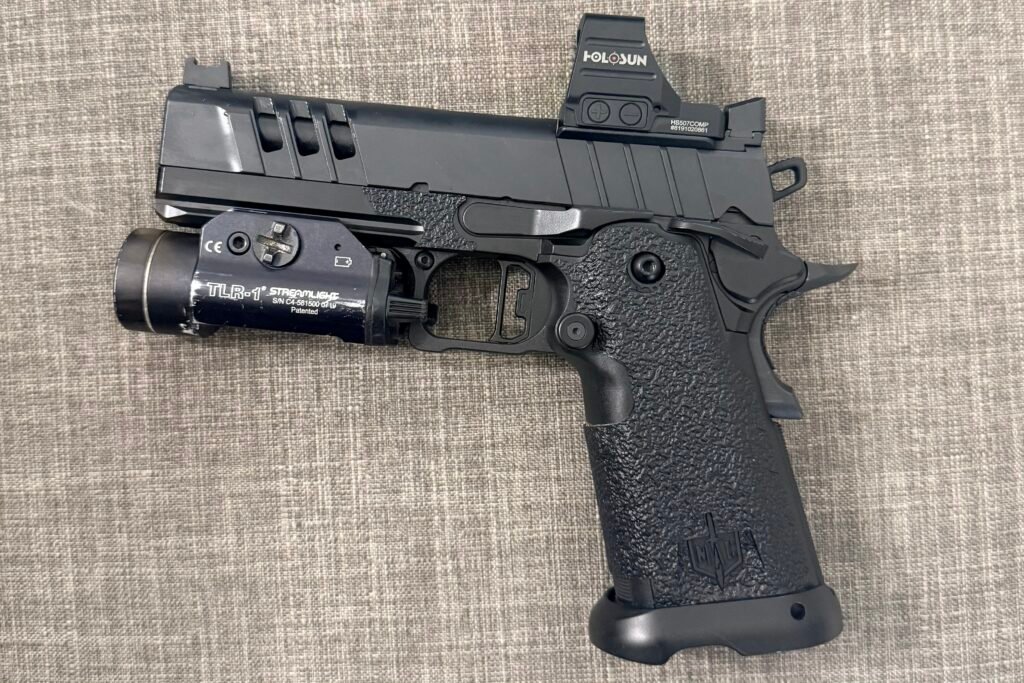
When you strap on a duty belt and step onto a post, the gun on your hip is not a fashion accessory. It is a tool you might have to use to save your life or someone else’s. That means every piece of it should earn its place. Here is what I carry, why I carry it, and the reasoning behind the setup.
My duty gun is a MAC DS-9 Duty 4.25. Sitting on it: a Holosun 507 Comp red dot, a Streamlight TLR-1 weapon light, and Handle It adhesive grips. That is the whole package. No gadgets, no gimmicks, nothing on there that does not have a job.
Part 1: Train How You Fight
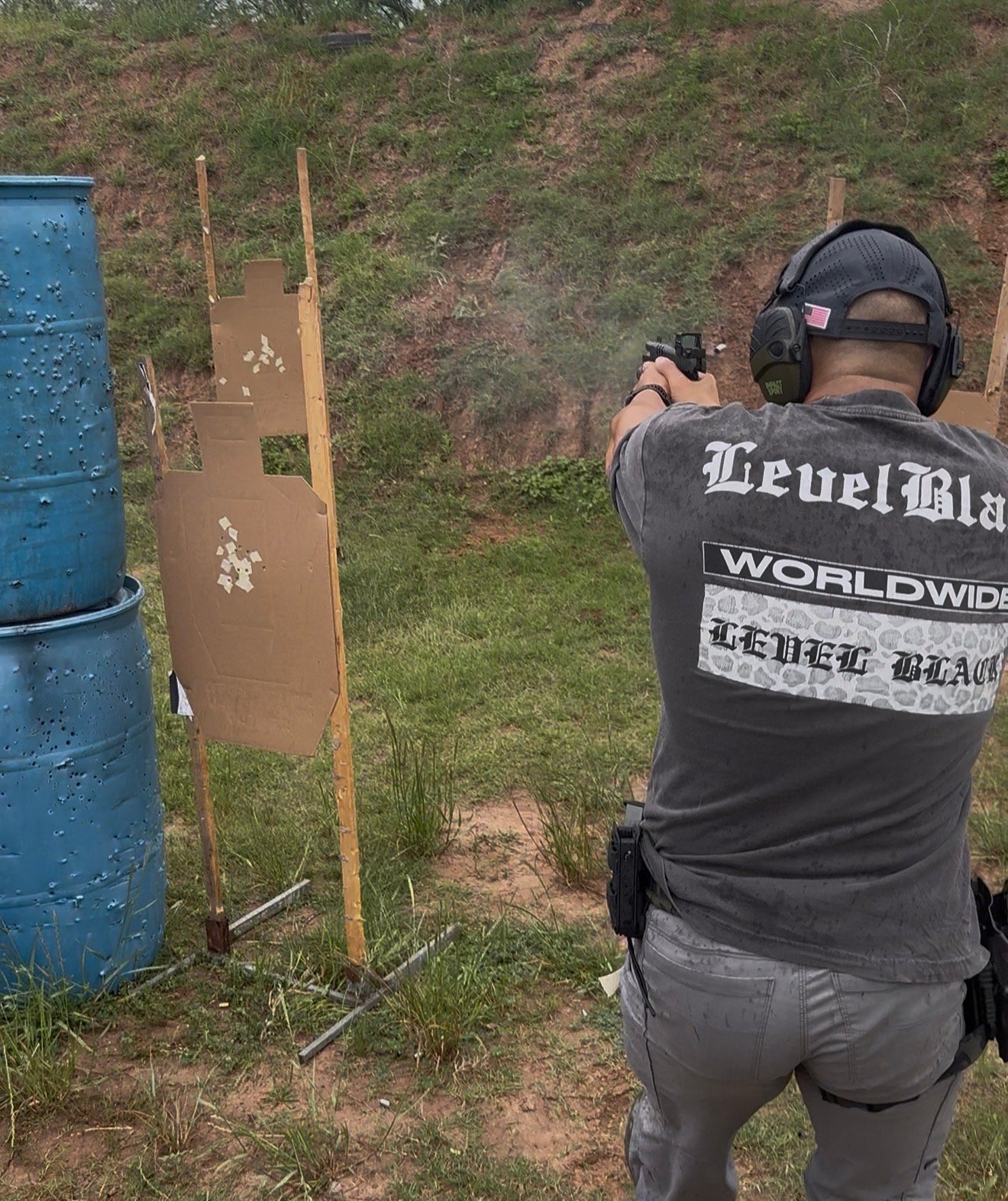
I shoot USPSA competitions. I am a competitive person by nature, and if I am going to do something, I want to be good at it. Matches are fun, but the fun is almost beside the point. Every stage I run is reps. Every draw, every reload, every transition is a small deposit into the account I am going to need if things ever go sideways on a job.
Outside of matches, I dry fire four to five days a week, ten to fifteen minutes a session. I run small USPSA style cardboard targets, working my draw, target transitions, reloads, and getting in and out of position. That adds up. Over the course of a month, that is hours of reps without burning a round of ammo or booking a lane.
Here is the part that matters for the gear conversation. I compete with the DS-9 Duty. I train with the DS-9 Duty. I work in uniform with the DS-9 Duty. Same gun, same holster position, same trigger, same sights. That is not an accident.
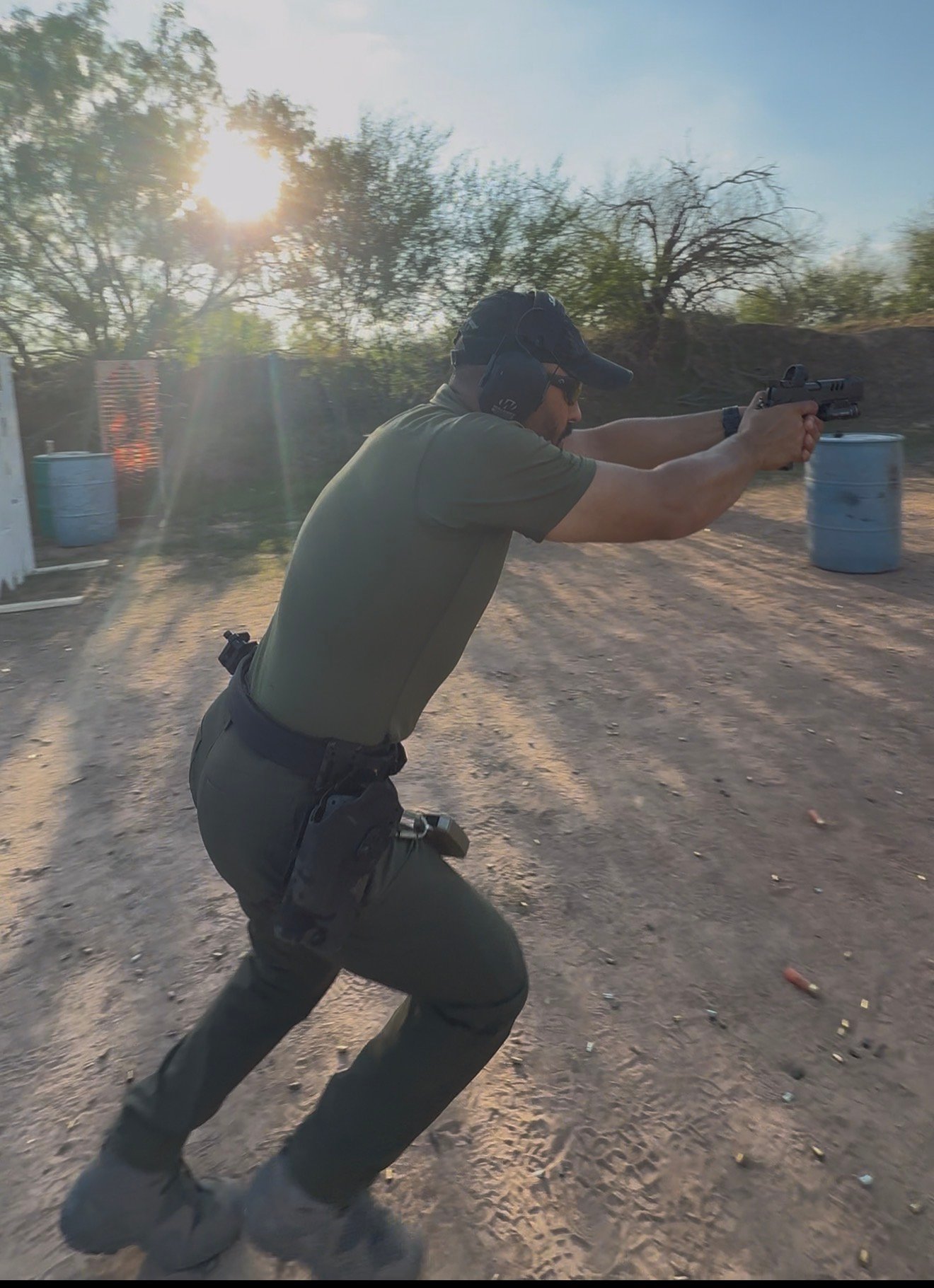
Think of it like a chef’s knife. A serious chef does not practice at home with a cheap paring knife and then show up at service with a totally different blade they have never cut with. They pick their knife, they learn every quirk of it, and that is the knife that shows up everywhere. Your carry gun should be the same. The gun you train with recreationally should be the gun you carry professionally. If those two guns are different, one of them is not getting the reps it needs.
The DS-9 Duty handles all three roles for me. It is accurate, it is reliable, and it runs hard. That is why it is on my belt when I clock in.
The holster plays by the same rule. I run a Safariland 6360RDS ALS duty holster, cut for a full size Staccato XC with a weapon light and optic. It is built for the Staccato, but it fits the MAC DS-9 like a glove because the two pistols share the same 2011 frame dimensions. That matters because the same holster will run almost every 2011 I own. Retention is excellent, the draw is clean, and it is the only holster on my belt whether I am at a match, on the range, or on post. That is the standard I hold every piece of gear to. If it does not serve all three roles, it does not make the belt.
Part 2: Iron Sights Are a Flip Phone
There is still a guy at every office who pulls out a flip phone and swears it is more reliable, the battery lasts a week, and he does not need all those fancy features. He is not wrong about any of it. He is also ten years behind everyone else and not catching up.
That is iron sights on a duty gun in 2026. They still work. They still hit where you point them. There is a guy at every post who swears his irons are all he needs. Meanwhile the rest of the industry moved on, the research is in, and it is not coming back the other way.
As an armed security professional you are expected to work day and night, in rain, in summer heat, in freezing cold, indoors, outdoors, bright sun, pitch dark. Your gun has to perform in all of it. That means the gear on it has to be chosen for the job, not for what you were comfortable with ten years ago.
Here is what I run and why.
Holosun 507 Comp: The Red Dot
The research on red dots versus iron sights is not close. A quality red dot beats irons for speed of target acquisition and for transitions between multiple targets. If you are running irons on a duty gun today, you are voluntarily handing away capability you could have for the price of an optic.
I hear the pushback. Some guys have thousands of rounds behind iron sights and do not want to eat the switching cost of learning a new sighting system. I understand the resistance. Learning a dot after a decade of irons is humbling. But sticking with irons forever because you are already good at them is the same argument as keeping the flip phone. You are optimizing for what you already know instead of what actually does the job better.
I run a Holosun 507 Comp on my duty gun. The 507 Comp is mostly marketed as a competition optic, and yes, that is where I started with it. But it is plenty capable as a work optic. The window is big, which matters when you are trying to get on target fast. The dot is crisp and bright enough to run in Texas sun without washing out. And I have more training time behind this optic than any other, so it is what goes to work with me.
There are a lot of good red dots on the market. For duty use, most guys who run in the elements prefer closed emitter designs for reliability, since debris and water cannot get into the emitter the same way. The 507 Comp is open emitter, and it has served me well, but if you are building a setup from scratch and you are going to be exposed to weather all day every day, a closed emitter is worth the extra money.
Streamlight TLR-1: Weapon Light
A weapon mounted light on a duty gun is not optional. It is the line between seeing your threat and guessing. In low light, a good light does three things at once. It lets you positively identify your target so you do not shoot the wrong person. It helps with recoil management because of the added weight hanging off the dust cover. And if you have to use it against a human threat, a bright beam to the face is disorienting and buys you time.
I run a Streamlight TLR-1. Like optics, there are plenty of good lights out there. My rule of thumb is stick to the mainstream names that have a track record. Streamlight and Surefire are the two I trust. They are not the cheapest options, and that is the point. When the light on your gun has to work, you want the brand that has been proving it works for decades.
Handle It Grips: Adhesive Grip Tape
This is the simplest piece on the gun and in some ways the most underrated. I live in Texas. Summer here is hot and humid. Your hands sweat, the polymer on a factory grip gets slick, and the gun starts moving around in your hand under recoil. That is a problem.
Handle It grips are adhesive grip panels you stick onto the frame. They add texture, they give you more friction, and they give you better leverage on the gun. It is a twenty dollar upgrade that pays off every single time you draw.
Think of it like the grip tape on a skateboard or the rosin a baseball pitcher uses. Small thing, massive difference in how the tool behaves in your hand.
Bottom Line
The gun on your hip at work should not be a random pick. It should be the gun you train with, the gun you compete with, and the gun you trust. Every accessory on it should earn its spot by solving a real problem you run into on the job.
For me, that is a MAC DS-9 Duty 4.25, a Holosun 507 Comp, a Streamlight TLR-1, Handle It grips, and a Safariland 6360RDS. No more, no less. Your setup might look different, and that is fine. Just make sure whatever is on your belt when you clock in has been tested everywhere else first.
Train how you fight. Dress for the mission. Everything else is noise.