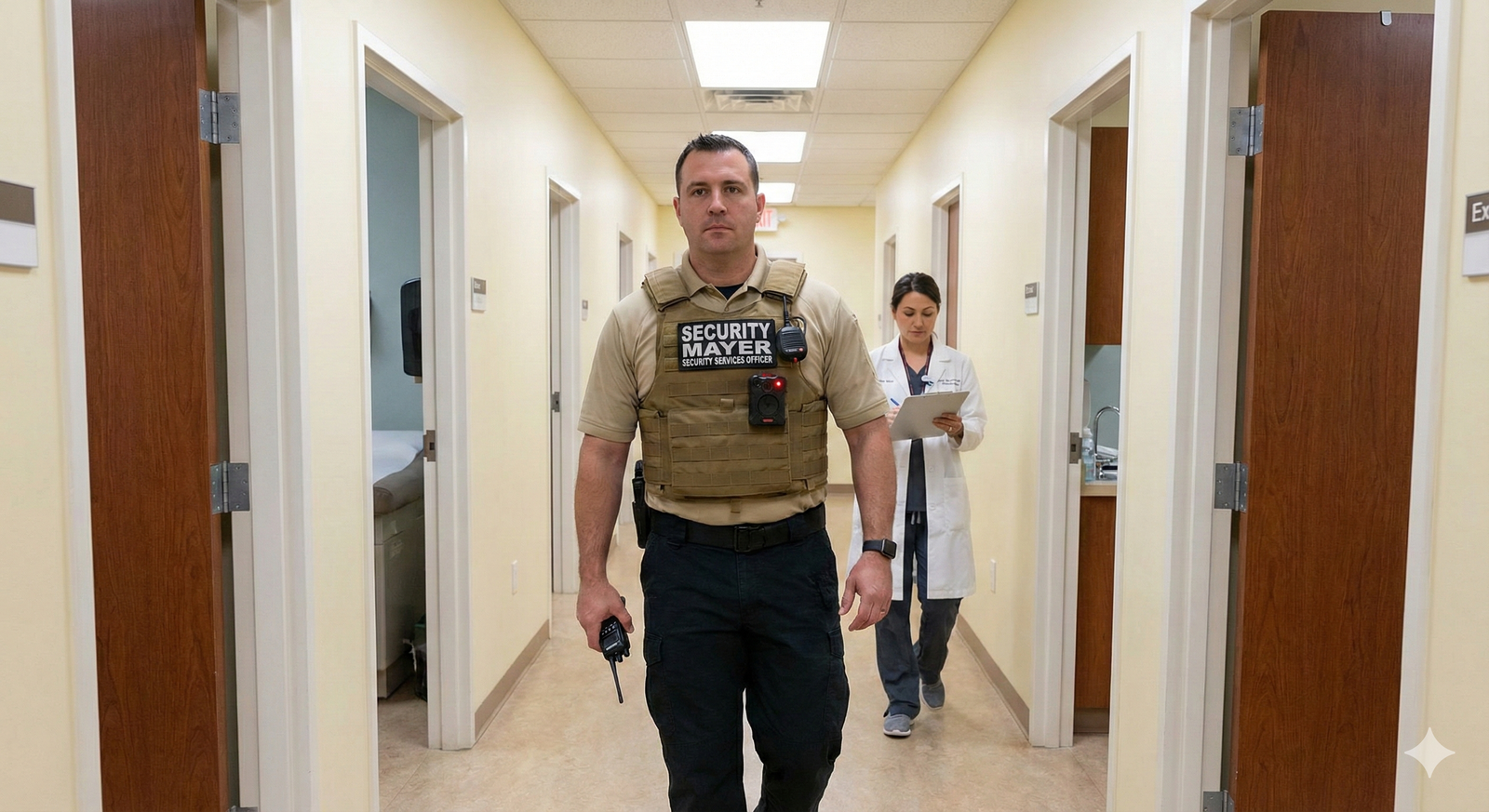
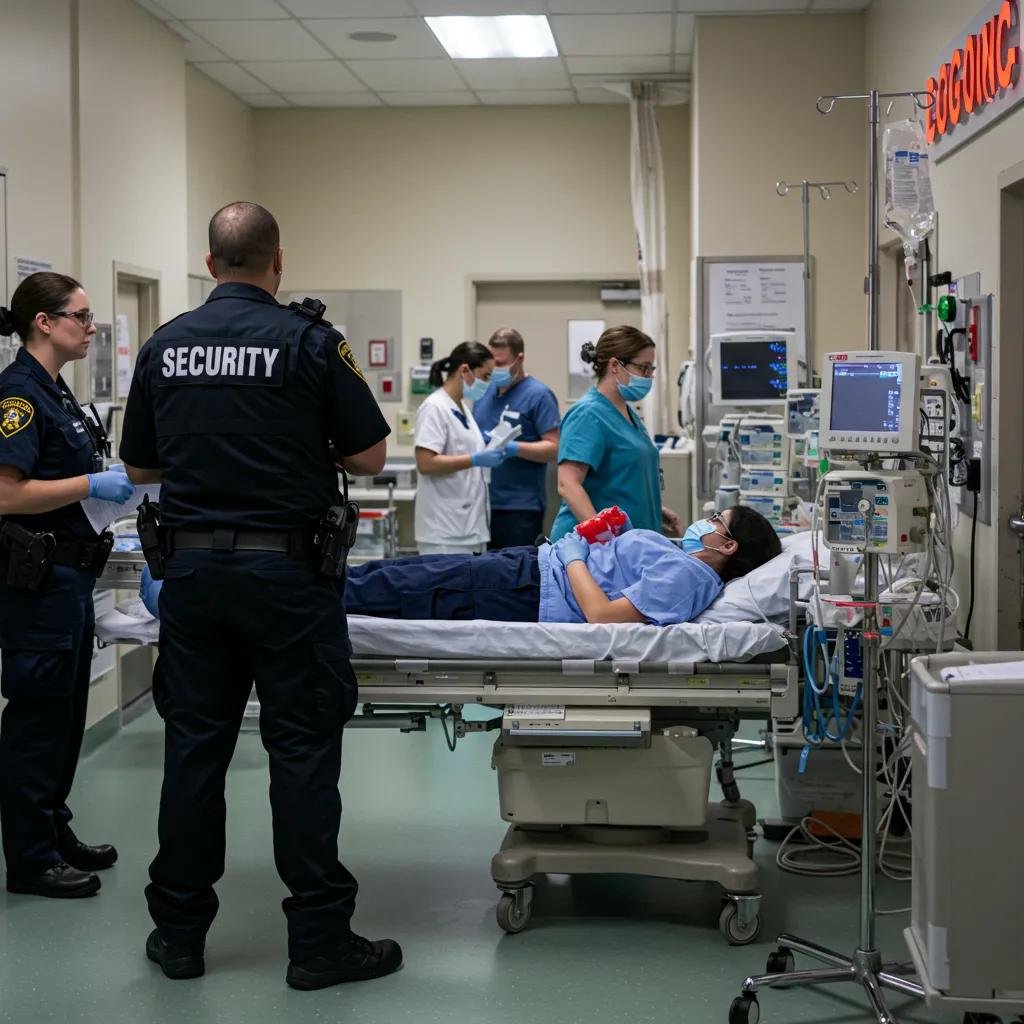
Healthcare security is not general guard work. It requires officers who understand patient rights, de-escalation in clinical settings, HIPAA awareness, and the balance between open access and controlled safety. Mayer Security Services is an IAHSS member company that builds security programs around the way hospitals, clinics, and behavioral health facilities actually operate.
Our officers are trained to work alongside nurses, physicians, and administrative staff without disrupting care. They understand how to handle agitated patients, manage visitor access during restricted hours, and respond to behavioral health emergencies with calm, documented control.
We coordinate with hospital leadership, risk management, and compliance teams to make sure security supports JCAHO readiness, CMS expectations, and your internal policies.
Nurses, ER techs, and front desk staff face verbal abuse and physical assault at alarming rates. Security presence must be visible, trained, and fast enough to prevent escalation before someone gets hurt.
Hospitals are open environments by design. Balancing patient family access with controlled entry to pharmacy, labor and delivery, behavioral health, and restricted units requires trained judgment, not just locked doors.
JCAHO, CMS, and state health department surveys evaluate security procedures, incident documentation, and emergency response. Gaps in reporting or response create compliance risk and liability exposure.
Patients in behavioral health units, patients under observation, and elderly patients with cognitive decline require security teams who can intervene without restraint violations or patient rights complaints.
Mayer Security Services delivers security programs that integrate with hospital operations, not just guard posts that check a box.
Trained officers for ER, lobby, and unit coverage who understand patient interaction, de-escalation, and clinical environment protocols.
Staff training, threat assessment, and rapid response planning for verbal abuse, patient aggression, and active threat scenarios.
Badge management, visitor screening, and controlled entry for pharmacy, L&D, NICU, behavioral health, and restricted areas.
Exterior patrols, parking structure security, and escort services for staff during shift changes and overnight hours.
Facility vulnerability assessments, active shooter drills, and emergency preparedness exercises that support JCAHO and CMS readiness.
Body-worn cameras, digital reporting, and incident documentation that create defensible records for compliance and legal review.
Security outcomes that matter to hospital leadership, risk management, and compliance teams.
Training, threat assessment, and response planning for healthcare staff.
Close protection for hospital leadership, physicians, and high-profile patients.
Facility security for medical offices, labs, and healthcare supply chain operations.