

Critical infrastructure security is judged by what never happens: no breach, no shutdown, no compliance finding, no injury. These numbers reflect how we protect refineries, power plants, and pipelines across Texas.
Texas refines roughly a quarter of the nation’s fuel, moves a vast share of its natural gas, and powers one of the largest grids in the country. A single compromised gate, unpatrolled right-of-way, or unmanned console can cascade into lost production, regulatory exposure, and real danger to people. Mayer Security Services builds infrastructure security programs across three core disciplines.
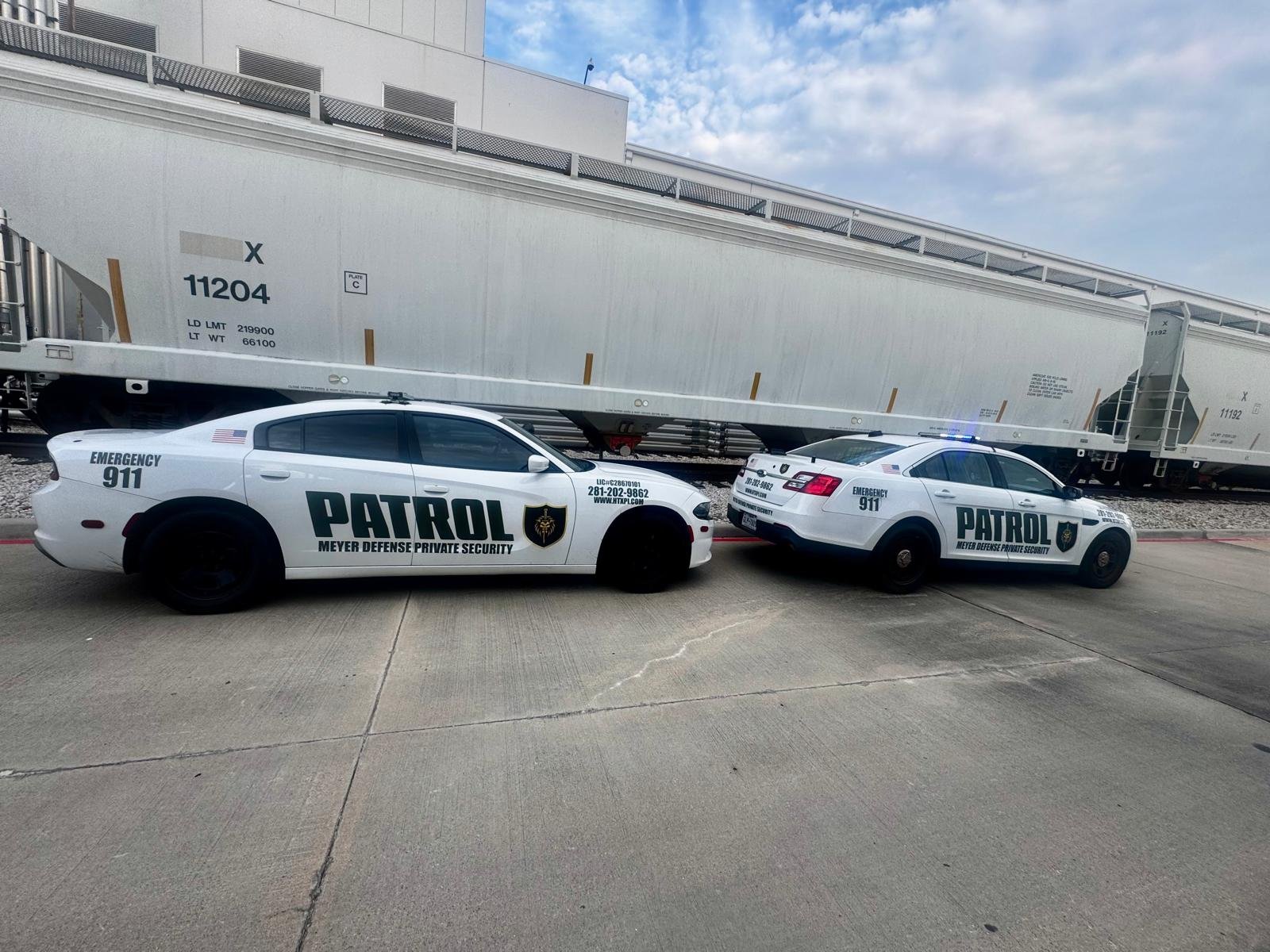
Refineries, petroleum terminals, tank farms, and fuel-loading racks are among the most tightly regulated and heavily targeted sites in the country. We provide armed and unarmed security officers, TWIC-gate access control, driver and contractor screening, mobile patrol, and marine and dock security for facilities along the Houston Ship Channel and the wider Gulf Coast.
Turnarounds and shutdowns bring hundreds of unfamiliar contractors on site in a compressed window. We surge-staff those events with vetted officers, badge and manifest control, and vehicle inspection so your maintenance schedule never stalls at the gate. Every post runs on written post orders, time-stamped reporting, and clean documentation your compliance team and insurer can stand behind.
Power generation stations, electrical substations, transmission yards, and battery and solar storage sites carry a level of consequence few other properties match. A physical intrusion, copper theft, or drone incursion can take megawatts offline and put a community in the dark. We staff power plant and utility security with officers trained for controlled access, console and command-center operations, patrol of energized areas, and disciplined incident response.
Our programs are built to support NERC CIP-014 physical security expectations for critical substations and the bulk electric system: layered access control, visitor and vendor management, alarm and camera response protocols, and detailed logs that hold up under audit. We coordinate directly with plant operations and local law enforcement so a response is planned long before it is needed.
Midstream assets are defined by distance. Gathering lines, transmission pipelines, compressor and pump stations, metering sites, and storage yards stretch across remote right-of-way where a threat can go unseen for hours. We close that gap with mobile right-of-way patrol, remote-site access control, construction and laydown-yard security, and rapid response to intrusion and tampering alarms.
Our officers are equipped for the realities of remote work: GPS-logged patrol routes, live check-ins, and clear escalation paths to operations and law enforcement. We build coverage to support TSA pipeline security directive expectations and the physical security plans midstream operators are increasingly required to document and defend.
Officers eligible for the Transportation Worker Identification Credential for unescorted access at MTSA-regulated maritime and terminal facilities along the Ship Channel and Gulf Coast.
Programs built with awareness of Chemical Facility Anti-Terrorism Standards: personnel surety, access control, and perimeter measures for high-risk chemical and petrochemical sites.
Facility security support aligned with the Maritime Transportation Security Act for docks, marine terminals, and vessel-interface operations.
Physical security coverage that supports NERC CIP-014 expectations for critical substations and generation assets on the bulk electric system.
Right-of-way and station security structured around TSA pipeline security directive guidance for owners and operators of critical pipeline systems.
OSHA and MSHA certified for hazardous and industrial environments, and fully Texas DPS licensed. Security on an energy site is life safety, not just access control.
Energy assets do not tolerate warm-body security. The stakes are measured in downtime, liability, and lives. Here is what separates infrastructure-literate protection from the alternative.
We measure success the way you do: continuous, uninterrupted operations. Our posts are engineered to keep trucks moving, contractors flowing, and turnarounds on schedule while never lowering the security standard at the gate.
Every shift produces time-stamped logs, incident reports, and access records built to survive an audit, an insurer’s review, or a regulator’s request. When something happens, you have the record before anyone asks for it.
Shutdowns and turnarounds bring a flood of unfamiliar contractors in a short window. We scale vetted officers, badging, and vehicle screening up and back down without you carrying that headcount year-round.
We lead with early threat recognition, calm presence, and defensible decisions, the same intelligence-led methodology we bring to executive protection. Force is a failure of foresight, and foresight is what protects your license to operate.
On-the-ground security operations throughout the refining, petrochemical, and midstream heartland of Texas, with consulting available for energy operators nationwide.
Tell us about your site: facility type, footprint, access points, compliance drivers, and current concerns. We will scope a security program and provide a confidential proposal.
Critical infrastructure protection is the specialized security of assets whose disruption would cause serious economic, safety, or national-security consequences. For Mayer Security Services that means the energy sector along the Texas Gulf Coast: refineries, petroleum and fuel terminals, tank farms, power plants, electrical substations, natural gas and midstream pipelines, compressor and pump stations, and petrochemical facilities. We protect the sites that produce, move, and power the region.
Yes. We staff refinery, terminal, and marine assignments with officers eligible for the Transportation Worker Identification Credential (TWIC), which is required for unescorted access at MTSA-regulated maritime and terminal facilities. Our officers are also OSHA and MSHA certified for hazardous and industrial environments and fully licensed through the Texas Department of Public Safety.
Yes. Turnarounds and shutdowns are one of our core capabilities. These events bring hundreds of unfamiliar contractors on site in a compressed window, which is exactly when access control matters most. We scale vetted officers, badging and manifest control, and vehicle inspection up for the duration of the event and back down afterward, so you get the coverage without carrying the headcount year-round.
We build power plant and substation security programs to support NERC CIP-014 physical security expectations for critical assets on the bulk electric system. That includes layered access control, visitor and vendor management, alarm and camera response protocols, patrol of energized areas, and detailed logs that hold up under audit. We coordinate the response plan with plant operations and local law enforcement before an incident happens.
Midstream security is a distance problem. We close the gap with mobile right-of-way patrol, remote-site access control, construction and laydown-yard security, and rapid response to intrusion and tampering alarms. Officers run GPS-logged patrol routes with live check-ins and clear escalation paths to operations and law enforcement, structured to support TSA pipeline security directive expectations.
Our on-the-ground operations cover the Texas Gulf Coast energy corridor, including the Houston Ship Channel, Pasadena, Deer Park, Baytown, La Porte, Texas City, Galena Park, Channelview, Freeport, Beaumont, and Port Arthur. For energy operators outside this footprint, we provide security consulting: threat assessments, physical security plans, and program oversight. Call (281) 202-9862 to scope your site.